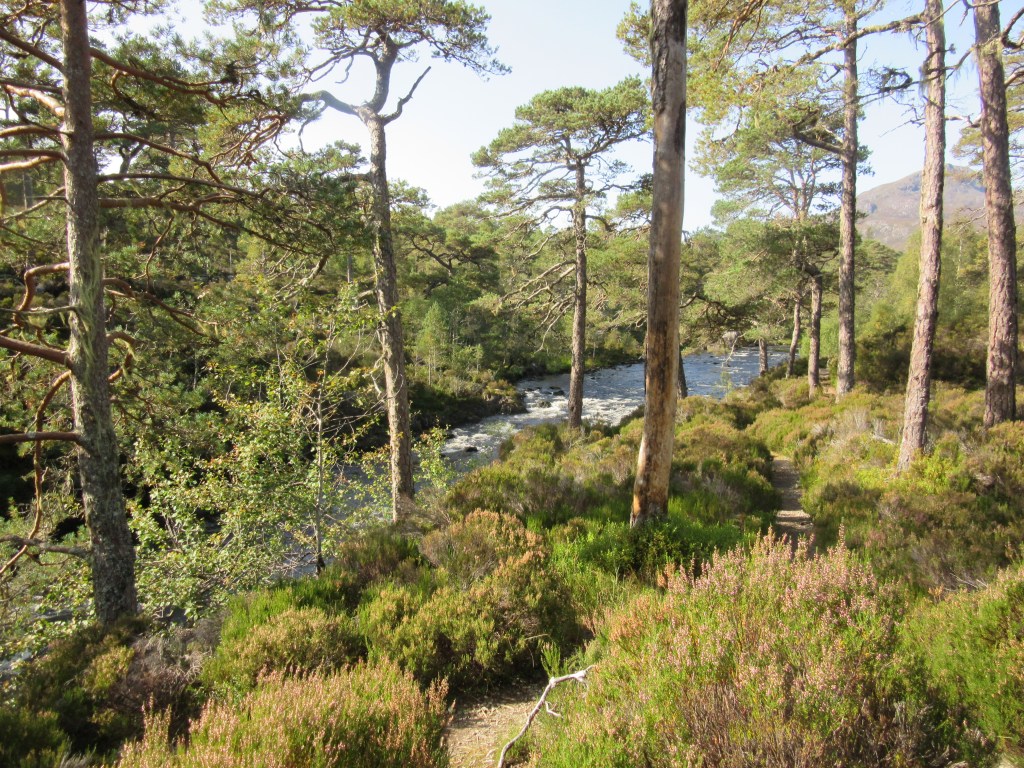
Caledonian pinewood: granny pines, a glimpse of a capercaillie, the drum of a woodpecker. Our imaginations of these woods seems infused with the sights and sounds of a mythical past that draws us to protect and enhance them for the future. The genetic continuity at the core of the notion of Caledonian pinewoods gives us a – perhaps false – sense of strength and stability. Yet, beneath the canopy of the remaining fragments there is true magic in a rich lichen flora that responds to, creates, and preserves, the forest conditions.
Caledonian pinewood has a lot to offer to lichens. As the crowns of pine trees are relatively open, a lot of light reaches the branches, trunks and forest floor, in turn allowing lichens to settle as there is sufficient light to photosynthesise. Though many pinewoods are relatively dry, this is not a problem for the majority of pinewood lichens as the photobiont of so-called chlorolichens (containing green algae) can absorb moisture from humid air as well as liquid rain. What’s more, lichens are able to absorb the few nutrients they need from the runoff from bark and rock that flows over their thalli.
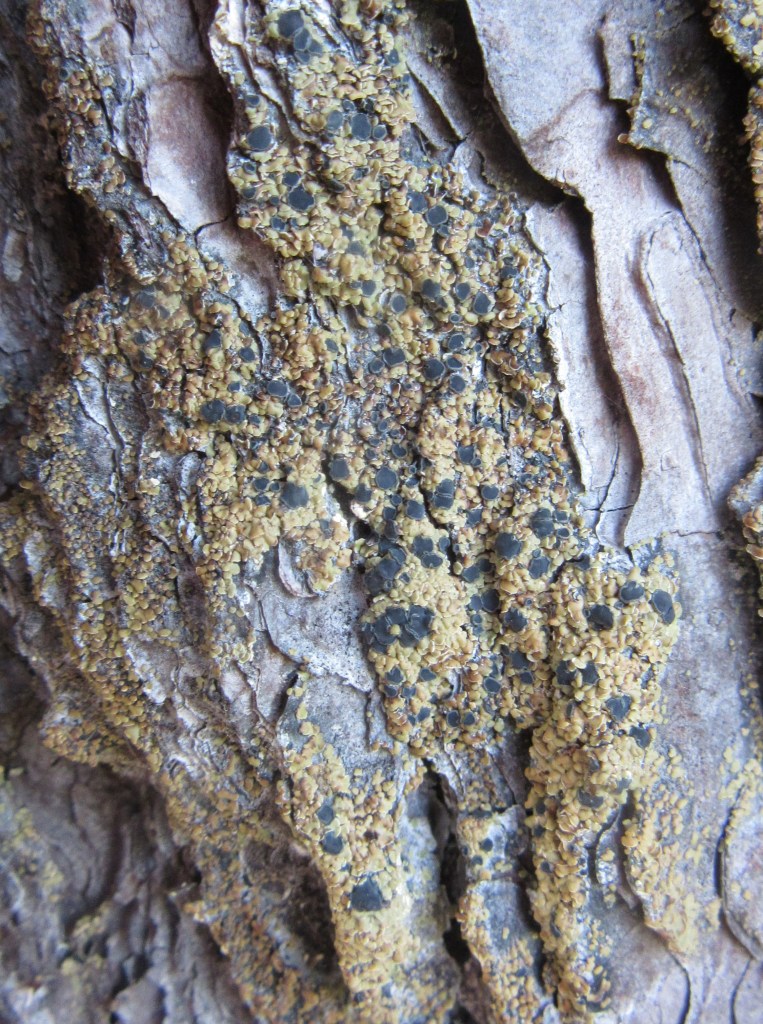
So if the conditions are right for lichens, how then do they gain a foothold? A quick look will soon reveal that there is plenty of surface for lichens to attach to: the trunks and branches of pines, dead wood, bedrock and boulders, the ground. Not all of these substrata, however, have the permanence that lichens prefer. Take bark, for example. The bark of both Scots pine and birch is flaky and peels off easily, and though lichens do attach, they may come off as bark detaches. The bark of mature Scots pine, however, is deeply grooved, in turn creating a much more interesting substratum for lichens. Higher up the trunk, for example, bark flakes may contain small patches of the crustose lichen Lecanora pulicaris. Inseparable from the bark, this species is a poor competitor as surrounding Hypogymnia physodes spreads its inflated lobes and wins the competition for light. Lower parts of trunk can be covered in the squamulose lichen Hypocenomyce scalaris, a species that attaches to the trunk like rooftiles, the top edge attached while the bottom edge sticks out and exposes soredia to the wind and passing animals.
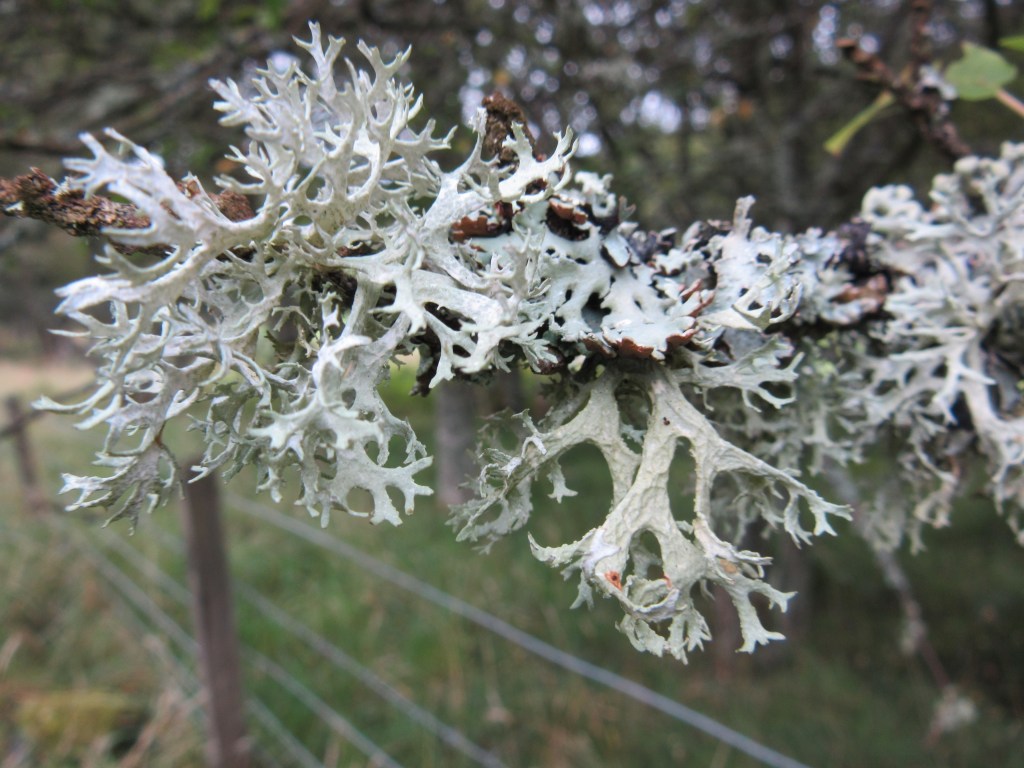
Often the most conspicuous lichen cover on pine trees cushions and drapes from branches. Foliose species like Platismatia glauca and Parmelia sulcata often cover the top of the branch, while fruticose lichens like Bryoria fuscescens and Usnea dasopoga hang on below. These foliose species are anchored to the branch with multiple rhizines and seem much more securely attached than the fruticose lichens that have a single holdfast and easily break off if you tuck a little.
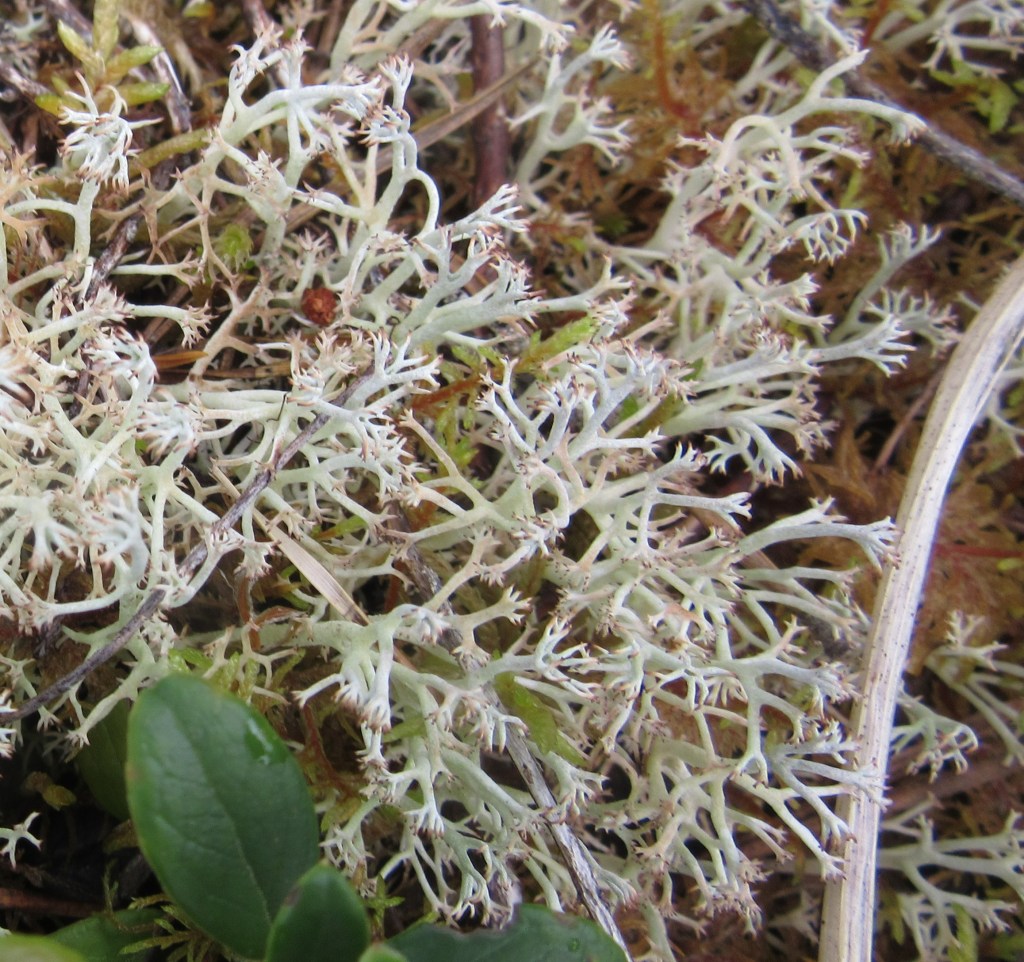
The forest floor provides mixed opportunities for lichens. Below Scots pine there often is a thick carpet of needles which is not a stable enough substratum for lichens to attach to. Where the canopy opens up a little, and on the side of paths, there may be patches of bare soil with good displays of Cladonia species. Beside the path there will also be boulders with even better Cladonia displays. These Cladonias may form thick mats and are anchored in the soil that has developed on the boulder over centuries. Through physical and chemical weathering, the crustose lichens on this rock have prepared the surface, while foliose species that followed trapped organic matter, including pine needles, and further accelerated the process of soil formation when they died back themselves. Only when enough soil has developed for Cladonia squamules to hold on to, the fruiting bodies to develop.
Once they have found the right conditions, lichens may have strategies to keep these conditions just so. When Cladonia species colonise a stump, dead wood decomposing fungi species are often not found immediately close by, and it has been suggested that this is because the Cladonia species actually contain lichen substances that deter fungi.

To me, the magic of Caledonian pinewood lies in the fact that the remaining woods have provided continuity through centuries and developed into a mosaic of niches and substrata, each offering slightly different opportunities for lichens. The lichen diversity in pinewood reflects this. As key contributors to the early stages of soil formation, lichens will also contribute to the conditions that allow them to thrive. Pine seeds germinate and trees die, and in this cycle lichens have found a way of slowing the decomposition of dead wood to hold on for just a little bit longer.
A picture gallery for lichens of upland pine and birchwood can be found here.
The next intakes for the distance learning course Lichens on Trees will start on 23 March and 18 May 2026.
Copyright text and images Petra Vergunst
 scottishlichens.co.uk